Face to face · Two voices, one passion
Face to Face - Luc Roeder & Corinne Kox
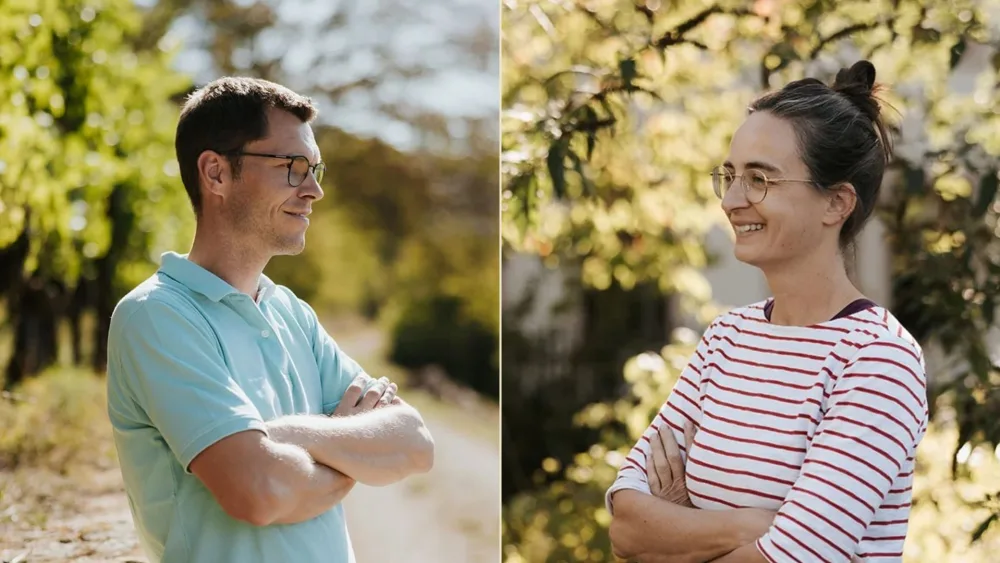
Two voices, one shared passion: Luc Roeder and Corinne Kox talk about everyday life in winemaking and reveal how it has changed over the years. A hobby winemaker and a long-established family winery exchange their perspectives.
The questions
1. What measures have you taken in recent years to adapt your vineyards to climate change?
2. Is your product range also evolving, perhaps through new grape varieties or products?
3. To what extent do changing consumer habits influence your work in the vineyard and the cellar?
4. How do you see the future of the winemaking profession?
Luc Roeder - Maison viticole Roeder
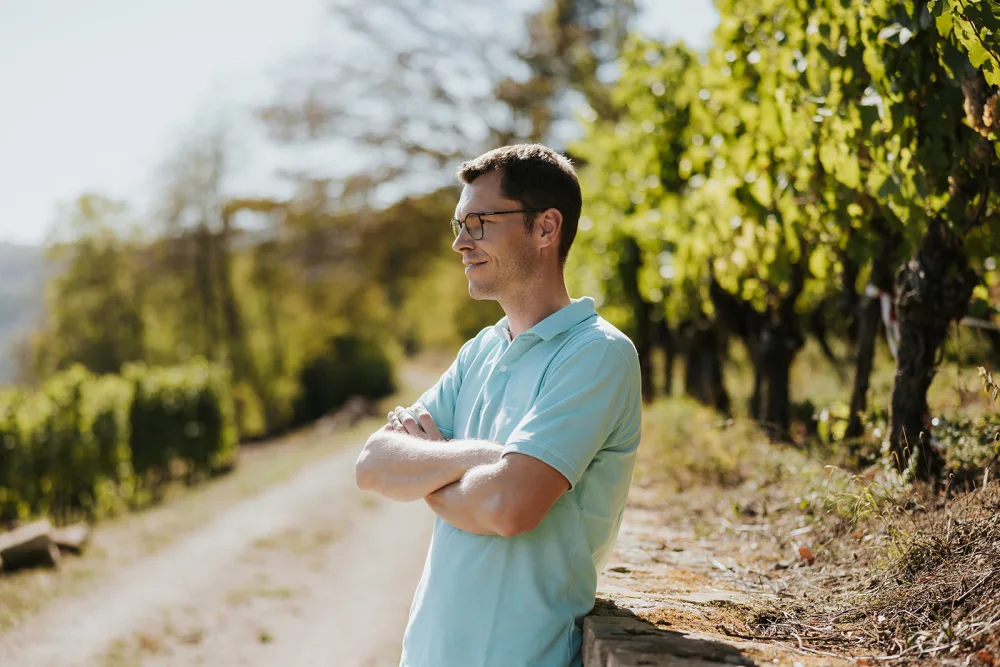
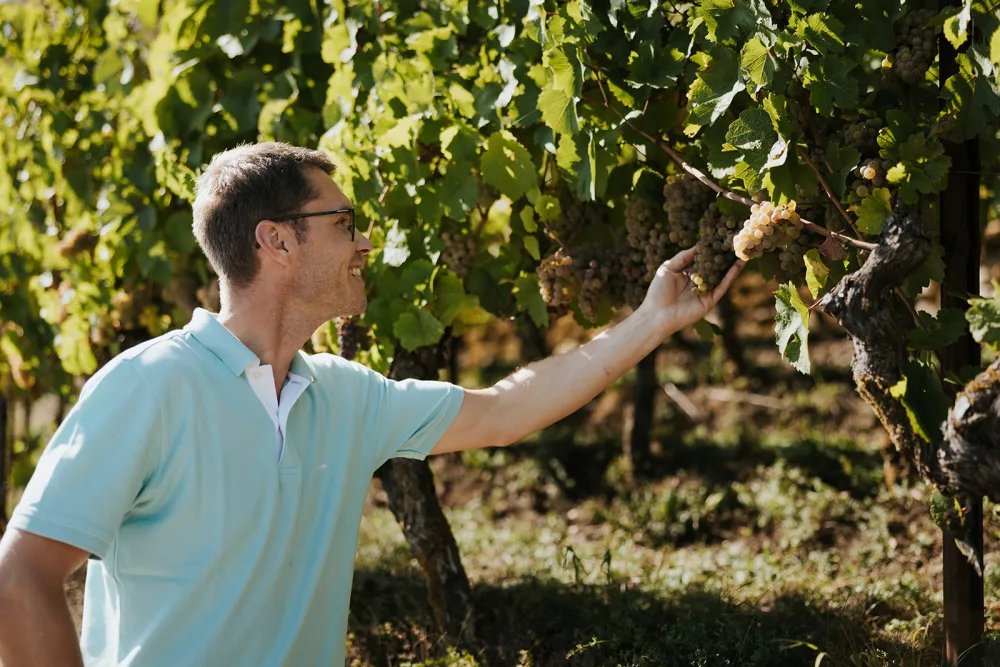
1. In my terraced vineyard on the “Hëlt” in Rosport, no land consolidation has taken place, which means I work on relatively small plots. This is a major advantage for me, as the soil retains water better and I can react more quickly to changes. The slopes face south and receive plenty of sunlight, which is why this year we decided to carry out very little leaf removal, if any at all, to prevent sunburn damage. We have also virtually stopped mowing to keep the soil temperature lower, reduce evaporation and therefore minimise stress on the vines. Of course, in years with more rainfall, we try to keep the soil drier instead. Every year is something of a lottery, as everything depends on the weather, and you never know how it will develop throughout the year.
2. Of course, some adaptation is necessary, but generally speaking, our grapes are well suited to the current climate. We therefore have no plans to plant different varieties. Instead, we are changing the way we manage the vineyard and work in the cellar. Older vineyards are relatively resilient, simply because their roots reach much deeper into the ground. One relatively recent development, however, is that higher temperatures mean we now have to process the grapes fairly quickly. In the past, autumn nights were still really cold during the harvest. Nowadays, harvesting starts earlier, and by the time we finish, temperatures can reach 25 degrees. This means we have to control fermentation differently in the cellar.
3. People often say that wine consumption is declining, but I’m not sure whether that is actually the case. What we are seeing is a change in consumer habits, particularly among younger generations. They tend to buy wine more spontaneously, in smaller quantities and on a regular basis throughout the year, mainly because they lack storage space. We are also seeing an increase in purchases of Crémant and red wine, two categories in which Luxembourg now has a lot to offer in terms of quality. Overall, customers place great importance on quality.
4. First and foremost, a winemaker is their own boss, working within a monoculture system, both today and in the future. This involves considerable risks for themselves, their family and their employees, because monocultures always carry risks and we are extremely dependent on the weather. Beyond working in the cellar, you need good marketing skills, mechanical knowledge and, of course, a genuine love of working with nature. In the future, winemakers, like people in every other profession, will need to be innovative and adapt to new machinery and software. On plots that have been brought together through land consolidation, AI-supported technology will soon make it possible to carry out certain tasks in the vineyard. To remain competitive, direct sales of wine and Crémant will continue to be an important factor, as the cost of all supplies has risen significantly.
Corinne Kox - Domaine viticole Laurent & Rita Kox
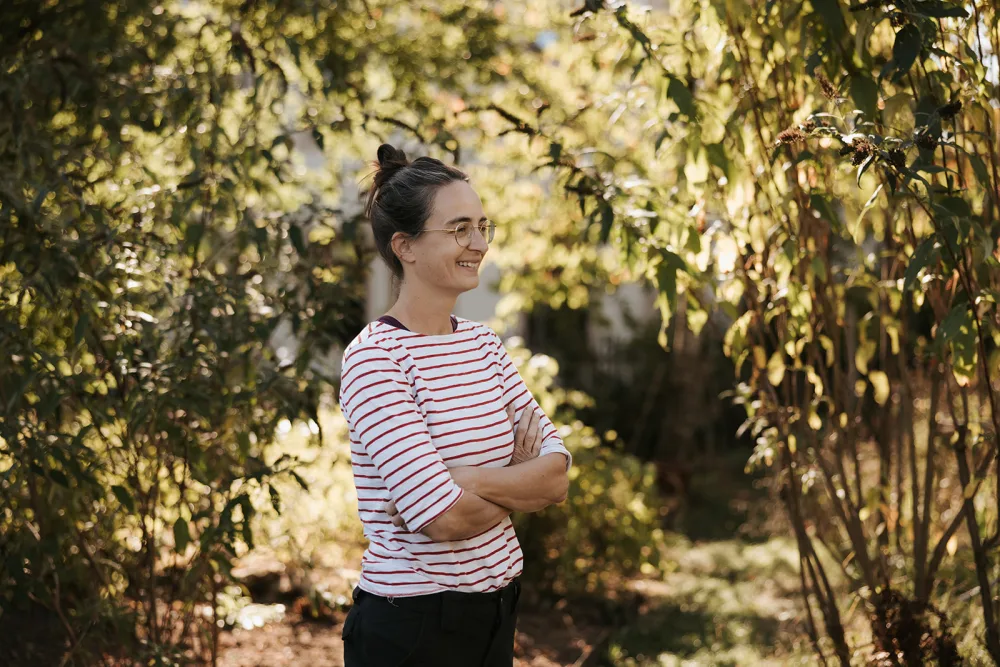
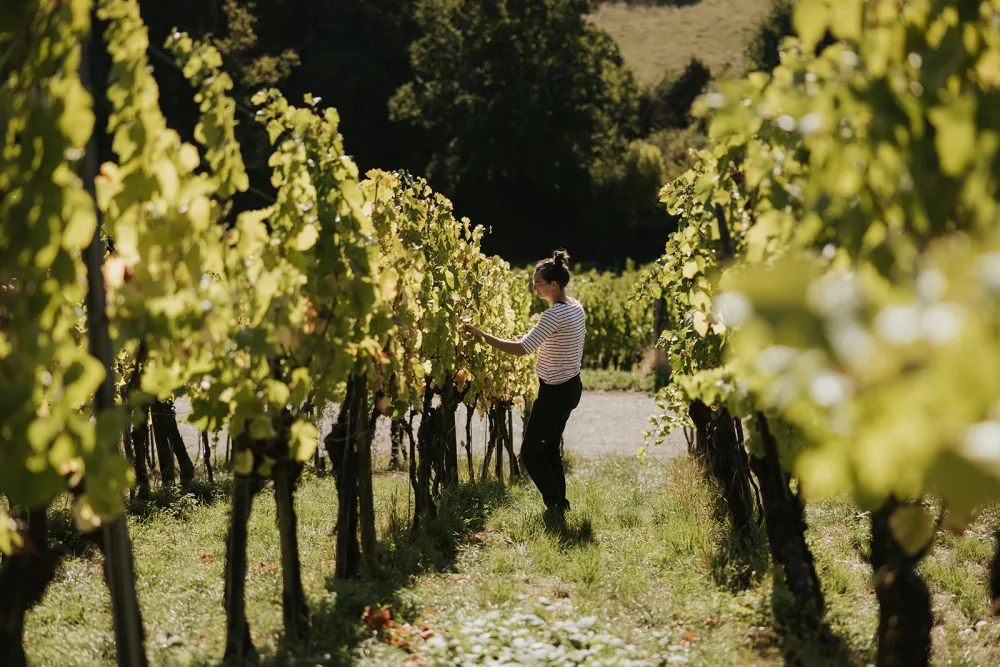
1. If we take 2024 and 2026 as examples, we can see that everything is becoming more extreme: one year it rains continuously, while another brings extreme drought and heatwaves. We therefore have to prepare for every possibility and try to make our vineyards as resilient as possible. However, we cannot rely on just one solution. Vines are perennial plants, so we cannot change everything overnight. But we can, for example, improve the soil structure so that it retains water more effectively. Since 2020, we have also been practising vitiforestry, meaning that we plant trees, hedges and other vegetation alongside the vines. This creates a different kind of coexistence, with greater biodiversity. Monocultures do not withstand weather extremes well, so other plants act as a buffer. Ultimately, we have to remain highly flexible so that we can respond to changes as quickly as possible.
2. Of course, in some cases we also need to plant new grape varieties, particularly more sustainable varieties that are naturally more resilient. Unfortunately, consumers are not quite ready to embrace this change, as they remain very traditional in their preferences. For a small winery, we offer an exceptionally wide range, with 15 different grape varieties that we grow ourselves, as well as 15 different Crémant cuvées. We love experimenting, but the aim is never simply to expand our range for the sake of it. New products always start with an idea. Sometimes, however, the most important innovation is simply finding new ways to cultivate the same grape varieties so that they can still produce good wine in 20 years’ time.
3. Winemakers around the world face the same problem: consumption is declining. We could easily meet demand in Luxembourg, but large quantities of wine are imported from abroad. Our competitors are therefore not the winemakers next door, but those in other countries. This means we definitely need to focus even more on quality and perhaps occasionally launch a truly outstanding product or explore export opportunities. We are certainly capable of competing internationally, something that is repeatedly confirmed to us.
4. Winemaking is an extremely varied profession. We wear many different hats, and the number keeps growing. Many people associate winemakers only with the finished product, wine, but we have a major influence on the entire region, its culture, traditions and tourism. This should not be underestimated. One of the biggest uncertainties at the moment is the economy: how will it develop, and how should we adjust our investments and prices accordingly? We have to weigh up far more factors than in the past, because so much is unpredictable and difficult to assess. Artificial intelligence, on the other hand, concerns me less, because our work is very physical, and decisions relating to sensory evaluation and blending, for example, still have to be made by us.