Out of the wine box · Wine tourism
Guided Wine Tours: A Journey of Discovery Through the Vineyards
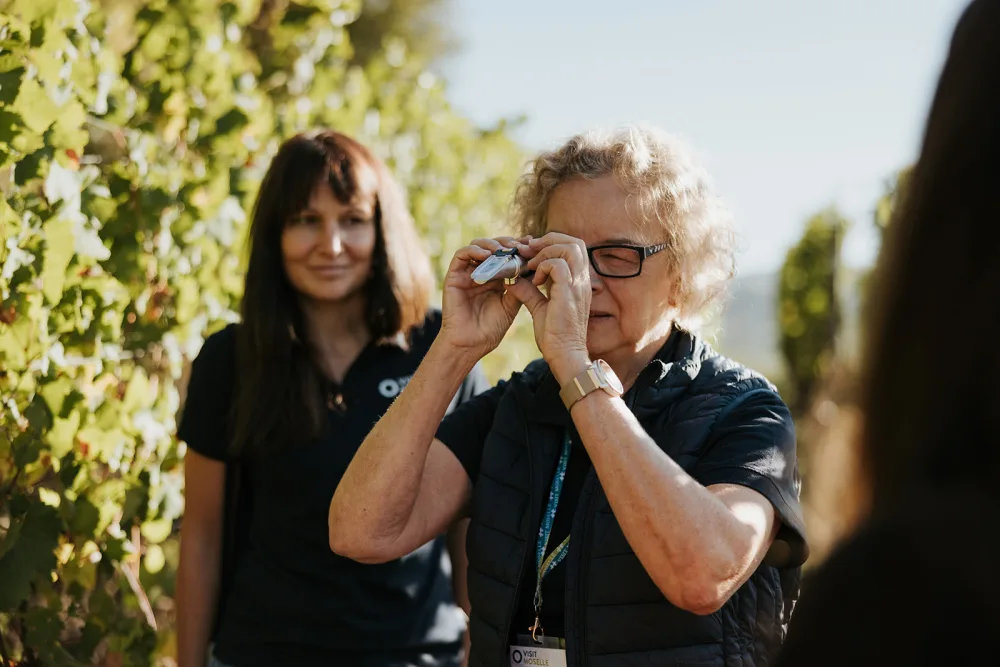
If you have always wanted to discover the entire journey from grape to finished wine, Visit Moselle’s wine tours are just what you are looking for.
Guided walks have long been part of the programme offered by the “Office Régional du Tourisme Région Moselle luxembourgeoise”, or ORT Moselle for short. This year, the range of activities has been significantly expanded, with a greater focus on wine. “The idea is to offer people a personal and authentic introduction to winemaking and the region,” explains Nina Maas from ORT Moselle. The new tours explore the different stages of wine production and allow visitors to experience the work of winegrowers throughout the changing seasons. Participants gain insights into the various stages of winemaking and discover the world of wine in all its diversity.
In spring, the focus is on nature awakening in the vineyards, as the vines begin to bud and vegetation slowly comes back to life. In summer, everything revolves around the intensive work carried out among the lush green vines. Autumn brings what is probably the most exciting time of the year: the grape harvest. Participants can watch the harvest workers in action and follow the grapes on their journey to the cellar. The winter season picks up right where autumn leaves off, as participating winemakers offer personal insights into their cellars. During the tasting that follows, their stories bring the wine tours to life. “Getting to know the winemakers gives the whole experience a particularly personal touch in a warm, family-like atmosphere,” says Jutta Kanstein, a tour guide at ORT Moselle.
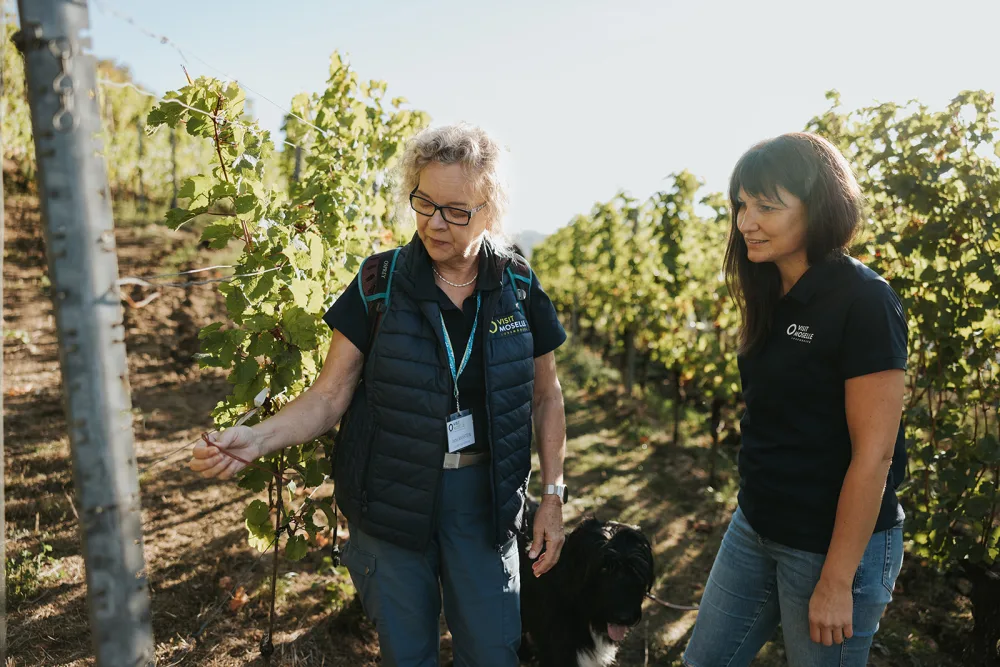
The tour guides receive special training developed by ORT Moselle to prepare them for their role as ambassadors of the Moselle region. Winegrowing is a particular focus of this regional training programme. However, the guided walks also aim to provide fascinating insights into other closely related topics. “We are in a cultural landscape that has been shaped by human activity over centuries. That is why, alongside winegrowing, we always pay particular attention to biodiversity, nature, geology and the history of the region,” Kanstein emphasises. The dry-stone walls and the tiny creatures that inhabit them, the plants growing in close symbiosis with the vines, the climate that determines how each year unfolds, and the history of Luxembourg’s winegrowing tradition: all these elements form part of the overall experience offered to participants on the wine walks.
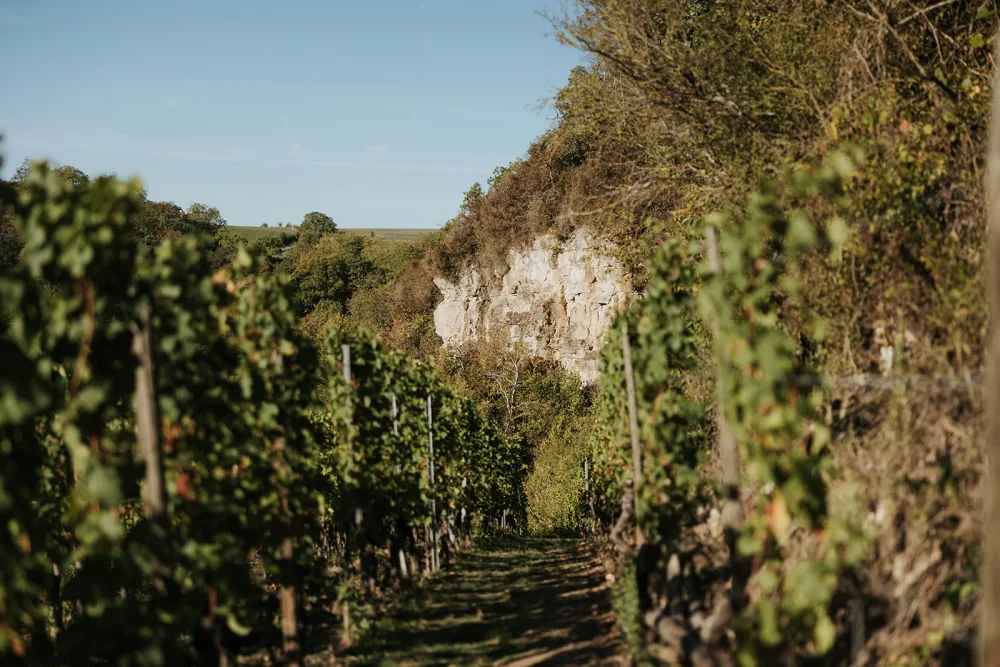
The tours take place throughout the year on scheduled dates in Ahn, Greiweldingen and Wellenstein, but can also be booked on request. “In Wellenstein, for example, people with reduced mobility can also take part, as the project is part of the ‘Tourism for All’ concept. The tours are also offered in several languages,” explains Maas. No prior knowledge is required to join the guided wine walks: whether you are a curious beginner or an experienced wine enthusiast, everyone is welcome.
Another advantage is that visitors who are interested in winegrowing but do not drink wine can, of course, enjoy alcohol-free alternatives during the tastings. The walks, which last approximately two hours and are followed by a tasting, are currently aimed primarily at adults. However, there are plans to develop more family-friendly formats in the future. “Even today, we can adapt the tours on request and, for example, use additional materials to make them interesting for children as well,” explains Kanstein. The team is also looking forward to the opening of the “Wäinhaus” in Ehnen, with which it plans to work closely. Nevertheless, the winemakers themselves remain at the heart of the experience, complementing the knowledge shared by the tour guides with their personal stories. “The best outcome would be for visitors to leave wanting to explore even more of the Moselle region, perhaps on a second, third or fourth tour. After all, depending on the season, the location and the winemaker, there is always something new to experience,” Maas emphasises.